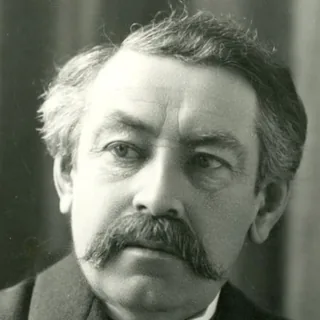
Key Facts
- 28 March 1862: born in Nantes
- December 1905: law separating the Churches and the State, of which he is the rapporteur
- July 1909: Prime Minister for the first time
- 1925: Locarno Treaties
- 1926: Nobel Peace Prize, with Gustav Stresemann
- 27 August 1928: Kellogg-Briand Pact
- 7 March 1932: dies in Paris
Biography
Aristide Briand (1862-1932), a lawyer, journalist and statesman, was one of the most ubiquitous politicians of the Third Republic: Prime Minister eleven times and a minister more than twenty times. Rapporteur of the law separating the Churches and the State, after the First World War he became the architect of Franco-German reconciliation, which earned him the Nobel Peace Prize in 1926 and the nickname of “pilgrim of peace”.
Born in Nantes on 28 March 1862, he studied law, became a lawyer and journalist and campaigned in the socialist ranks, where he championed the idea of a general strike. Close to Jean Jaurès, he took part in founding L'Humanité in 1904. Elected deputy in 1902, he was the rapporteur of the law separating the Churches and the State, passed in December 1905, which he made into a compromise text, mindful of freedom of worship.
In 1906 he accepted the Ministry of Public Instruction, which permanently estranged him from the Socialists, and he became Prime Minister for the first time in July 1909. In 1910 he broke the railway strike by calling the strikers up for military service. During the First World War he led the government from October 1915 to March 1917, at the time of the Battle of Verdun. He became Prime Minister again in 1921 and several more times in the 1920s. An outstanding speaker, he was renowned for his skill at compromise.
Foreign Minister almost without interruption from 1925 to 1932, he pursued a policy of rapprochement with Gustav Stresemann's Germany. The Locarno Treaties of 1925 guaranteed Germany's western borders, and Germany joined the League of Nations the following year. The two men were jointly awarded the 1926 Nobel Peace Prize. On 27 August 1928 Briand signed with the American Frank Kellogg the pact that bears both their names and outlawed war. In September 1929 he proposed to the League the creation of a European federal union.
The economic crisis and the rise of nationalism, however, dashed his hopes. A candidate for the presidency of the Republic in May 1931, he was defeated by Paul Doumer. He left the Quai d'Orsay early in 1932 and died in Paris on 7 March 1932, aged sixty-nine. Mocked by opponents on the right and the left, who found his pacifism naive, he remains one of the forerunners of European integration.
Sources: Wikipédia, « Aristide Briand »; Wikipedia, « Aristide Briand »
French heads of government (1909-1911)
French heads of government (1913)
French heads of government (1915-1917)
French heads of government (1921-1922)
French heads of government (1925-1926)
French heads of government (1929)
Also worth discovering
Last updated: