15th century
-
Other
Christopher Columbus reaches Venezuela
On his third voyage Christopher Columbus sailed along the Paria Peninsula and the mouth of the Orinoco: it was the first time he touched the American mainland. The following year Spanish navigators named the coast “Venezuela”, “little Venice”.
16th century
-
Economy
Venezuela granted to the Welsers
In debt to the Augsburg bankers, Charles V granted them the right to colonise the province. The Welsers sent expeditions in search of El Dorado until the Crown withdrew the grant in the middle of the century.
-
Society
Foundation of Caracas
The conquistador Diego de Losada founded Santiago de León de Caracas in a valley near the coast. The city became the centre of the province and then, in the 18th century, a wealthy town exporting cocoa.
18th century
-
Politics
Creation of the Captaincy General of Venezuela
The Spanish Crown brought the provinces of the region together under the authority of a captain general based in Caracas. This administrative framework foreshadowed the territory of the future Venezuela.
19th century
-
War
Francisco de Miranda's expedition
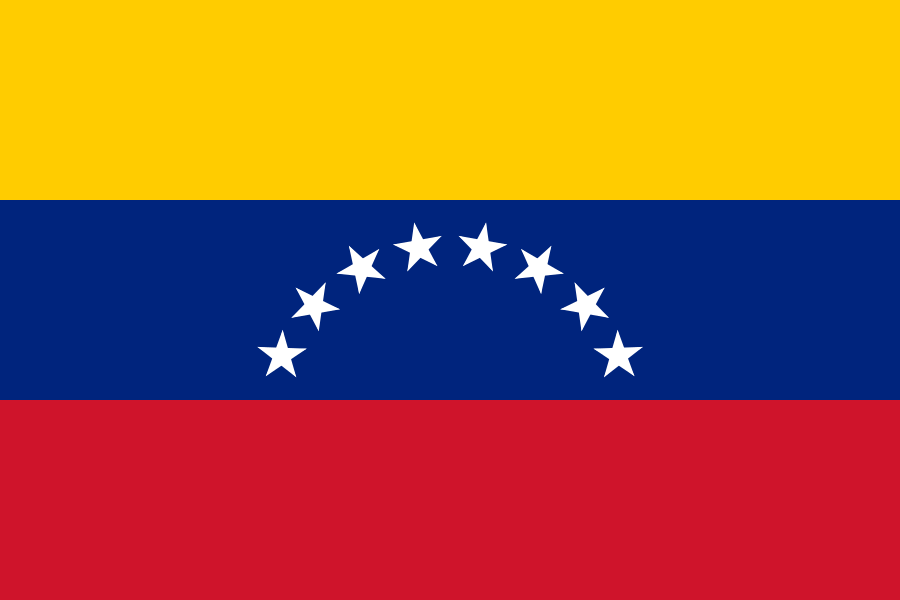
Francisco de Miranda, the forerunner of independence, landed on the Venezuelan coast with a few hundred volunteers and raised the yellow, blue and red flag for the first time. Lacking the support of the population, the expedition failed.
-
Politics
Venezuelan Declaration of Independence
In Caracas a congress meeting under the influence of Francisco de Miranda proclaimed the independence of Venezuela, the first in Spanish America. The First Republic was overthrown by the royalists as early as 1812.
-
Other
Caracas earthquake and fall of the First Republic
A violent earthquake destroyed Caracas and other towns held by the patriots, which the royalist clergy presented as divine punishment. Spanish troops regained ground and Miranda capitulated in July.
-
War
Battle of Carabobo
Simón Bolívar crushed the royalist army on the plain of Carabobo, near Valencia. The victory secured the independence of Venezuela, which became part of Gran Colombia.
-
Politics
Venezuela leaves Gran Colombia
Led by General José Antonio Páez, Venezuela broke away from Gran Colombia and adopted its own constitution. Bolívar died in December of the same year in Santa Marta.
-
War
Federal War
A civil war between federalists and conservatives lasted five years and killed tens of thousands. The federalist victory in 1863 led to the constitution of 1864, which turned the country into the “United States of Venezuela”.
20th century
-
Politics
Juan Vicente Gómez seizes power
Vice-President Juan Vicente Gómez took advantage of President Cipriano Castro's trip to Europe to seize power. He ruled the country with an iron fist until his death in 1935.
-
Economy
Barroso II well blowout
Near Lake Maracaibo the Barroso II well gushed oil for several days. Foreign companies flocked in and within a few years Venezuela became one of the world's leading oil exporters.
-
Politics
Fall of Marcos Pérez Jiménez
A popular and military uprising drove out the dictator Marcos Pérez Jiménez. In the autumn the main parties signed the Punto Fijo Pact, which opened forty years of representative democracy.
-
Economy
Foundation of OPEC
On the initiative of the Venezuelan minister Juan Pablo Pérez Alfonzo and his Saudi counterpart, Venezuela, Saudi Arabia, Iraq, Iran and Kuwait founded the Organization of the Petroleum Exporting Countries in Baghdad.
-
Economy
Nationalisation of oil
Under the presidency of Carlos Andrés Pérez the oil industry was nationalised and entrusted to a state company, Petróleos de Venezuela (PDVSA). Oil revenue financed the country's growth but made it dependent on crude prices.
-
Society
The Caracazo
A rise in transport fares, decided as part of an austerity plan, sparked riots and looting in Caracas. The army's crackdown killed several hundred people and lastingly shook the political system.
-
Politics
Election of Hugo Chávez
The former lieutenant colonel Hugo Chávez, who had led a coup attempt in 1992, was elected president. In 1999 he had a new constitution adopted, creating the Bolivarian Republic of Venezuela, and launched his “Bolivarian Revolution”.
21st century
-
Politics
Death of Hugo Chávez
Hugo Chávez died of cancer in Caracas. His vice-president, Nicolás Maduro, was narrowly elected to succeed him. With the collapse of oil prices the country sank into an economic and humanitarian crisis that drove millions of Venezuelans into exile.
-
Politics
Disputed re-election of Nicolás Maduro
The National Electoral Council declared Nicolás Maduro the winner without publishing detailed results. The opposition, which claimed victory for its candidate Edmundo González Urrutia, denounced fraud; most Western countries and several Latin American neighbours refused to recognise the result.
-
Politics
Capture of Nicolás Maduro by the United States
During a military operation in Caracas, American forces captured President Nicolás Maduro and his wife, who were taken to New York to stand trial, notably on narco-terrorism charges. Vice-President Delcy Rodríguez became acting president.
Other country timelines


Last updated: