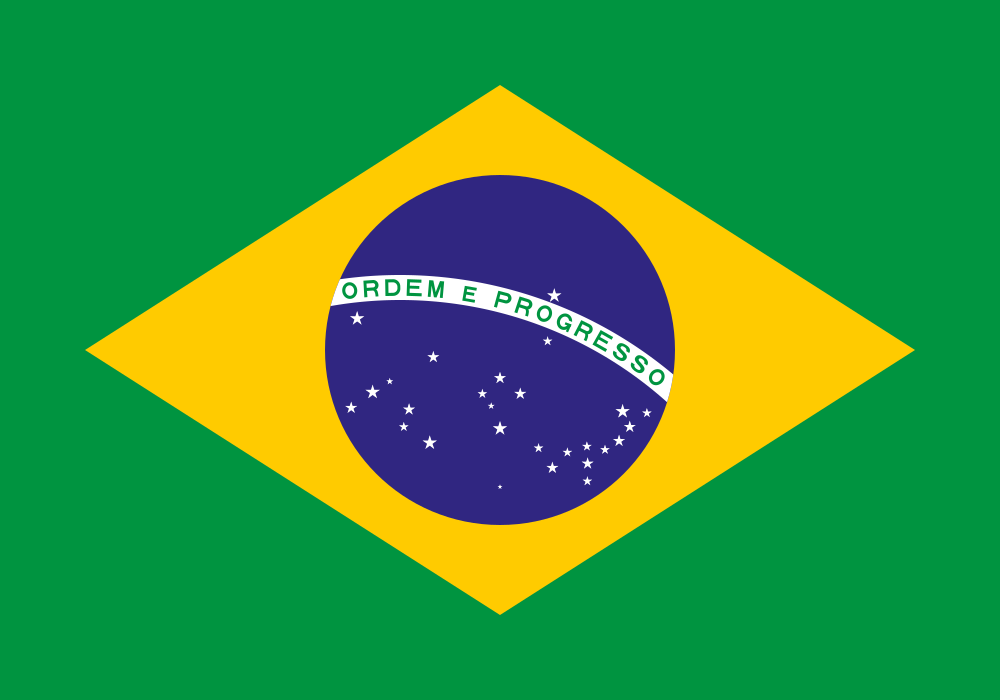
Brazil: timeline and key events
-
Politics
Arrival of Cabral, claiming of Brazil
Pedro Álvares Cabral reaches the Brazilian coast on 22 April and takes possession of the territory in the name of the King of Portugal, encountering the Tupi peoples and sending a report to Lisbon that will change world geopolitics.
-
Politics
Foundation of Salvador, first capital of Brazil
Tomé de Sousa founds the city of Salvador de Bahia as the first general government of Brazil, organising colonial administration and establishing the capital that will remain the political and cultural centre of the colony for two centuries.
-
War
Dutch presence in north-eastern Brazil
The Dutch West India Company seizes Recife and dominates north-eastern Brazil until 1654, bringing a distinct culture and architecture but eventually driven out by local Luso-Brazilian resistance.
-
Economy
Discovery of gold in Minas Gerais
The discovery of gold seams in the Minas Gerais region triggers a gold rush that transforms the colony: hundreds of thousands of migrants and African slaves converge, making Brazil the world's leading gold producer.
-
Politics
Transfer of the capital to Rio de Janeiro
The colonial capital is transferred from Salvador to Rio de Janeiro to be closer to the gold and silver mines of the south, making Rio the new administrative, commercial and cultural centre of colonial Brazil.
-
Politics
Inconfidência Mineira, first independence movement
A group of intellectuals and soldiers from Minas Gerais, including the poet Tiradentes, conspire for Brazilian independence, inspired by the Enlightenment; discovered, Tiradentes is executed but becomes a national hero and symbol of resistance.
-
Politics
Arrival of the Portuguese Court in Rio de Janeiro
Fleeing the Napoleonic invasion, Prince Regent João VI transfers the entire court from Lisbon to Rio de Janeiro with 15,000 people, making Brazil the only country in the Americas to host a reigning European monarchy.
-
Politics
Brazilian Independence, Dom Pedro I proclaims the Empire
Dom Pedro, son of João VI, cries "Independence or death!" (the Grito do Ipiranga) and proclaims Brazilian independence on 7 September, crowning himself the first Emperor of Brazil, the only independent empire in the Americas.
-
Politics
Abolition of the slave trade
Under British pressure, Brazil adopts the Eusébio de Queiróz Law definitively banning the importation of African slaves, ending one of the most significant Atlantic slave trade flows, although slavery itself remains legal.
-
Politics
Abolition of slavery, Golden Law
Princess Isabel signs the Lei Áurea on 13 May, immediately and without compensation abolishing slavery in Brazil, the last country in the Americas to do so after having imported approximately 5 million African slaves over 350 years.
-
Politics
Proclamation of the Brazilian Republic
Marshal Deodoro da Fonseca leads a military coup that overthrows Emperor Pedro II and proclaims the Republic, ending sixty-seven years of constitutional monarchy in Brazil.
-
Politics
Revolution of 1930, Getúlio Vargas seizes power
A military coup brings Getúlio Vargas to power, ending the Old Republic dominated by the oligarchies of São Paulo and Minas Gerais; Vargas will govern Brazil for twenty years, alternating between democracy and dictatorship.
-
Culture
Inauguration of Brasília, new capital
President Juscelino Kubitschek inaugurates Brasília, a city built entirely in less than four years in the heart of the sertão, designed by urban planner Lúcio Costa and architect Oscar Niemeyer, a symbol of a nation marching towards modernity.
-
Politics
Military coup, beginning of 21 years of dictatorship
The armed forces overthrow President João Goulart, backed by the United States in the Cold War context, establishing a military regime that will exercise political repression and censor the press until 1985.
-
Politics
Return to democracy, end of military dictatorship
General João Figueiredo transfers power to civilian Tancredo Neves (who died before his inauguration), then to José Sarney, ending twenty-one years of military dictatorship and opening the period of the Nova República.
-
Politics
New democratic Constitution
Brazil adopts its new Constitution, nicknamed the "Citizens' Constitution" by Assembly President Ulysses Guimarães, guaranteeing broad social rights, fundamental freedoms and consolidating Brazilian democracy.
-
Other
Earth Summit in Rio de Janeiro
Rio de Janeiro hosts the United Nations Conference on Environment and Development with 178 countries, resulting in the Convention on Biodiversity, the Framework Convention on Climate Change and Agenda 21, founding milestones of international environmental law.
-
Economy
Plano Real, end of hyperinflation
Finance Minister Fernando Henrique Cardoso launches the Plano Real, replacing the cruzeiro with the real, stabilising the currency and bringing inflation down from 2,000% to less than 10% in a year, transforming the Brazilian economy.
-
Politics
Election of Lula, historic left-wing victory
Luiz Inácio Lula da Silva, a former metalworker and trade unionist, is elected President, the first left-wing victory in Brazil, opening a period of economic growth and inequality reduction with the Bolsa Família programmes.
-
Sport
Rio Olympics, first Games in South America
Rio de Janeiro hosts the Summer Olympics for the first time in a South American country, with 206 delegations, an opening ceremony celebrating Brazilian culture and a record performance from the Jamaican athletics delegation.