Canada: timeline and key events
-
Culture
First Indigenous civilizations
The first Indigenous peoples settle in North America around 12,000 years ago, developing diverse cultures from the boreal forests to the Pacific coast.
-
Culture
Viking settlement at L'Anse aux Meadows
Leif Erikson's Vikings establish a camp in Newfoundland around 1000 AD, the first known European contact with the American continent, five centuries before Christopher Columbus.
-
Politics
Jacques Cartier's exploration
Jacques Cartier sails up the St. Lawrence River and claims the territory in the name of the King of France, paving the way for French colonization in North America.
-
Politics
Foundation of Quebec by Champlain
Samuel de Champlain founds the city of Quebec on July 3, 1608, establishing the first permanent French settlement in North America and laying the foundations of New France.
-
Economy
Creation of the Hudson's Bay Company
The Hudson's Bay Company is founded by British royal charter in 1670, granting a monopoly on the fur trade over the vast territory of Rupert's Land.
-
War
Battle of the Plains of Abraham
The Battle of the Plains of Abraham on September 13, 1759, sees British General Wolfe defeat the Marquis de Montcalm, sealing English domination over New France.
-
Politics
Treaty of Paris, France cedes Canada
The 1763 Treaty of Paris ends the Seven Years' War: France officially cedes Canada to Great Britain, permanently transforming the fate of New France.
-
War
Anglo-American War, Canada resists
During the War of 1812, Canada repels several American invasion attempts, forging a distinct identity separate from the United States and reinforcing British loyalism.
-
Politics
Canadian Confederation
The British North America Act of July 1, 1867 unites Canada, Nova Scotia, and New Brunswick into a self-governing federal dominion, marking the official birth of modern Canada.
-
Economy
Completion of the Canadian Pacific Railway
The last spike of the Canadian Pacific Railway is driven on November 7, 1885 at Craigellachie, linking the Atlantic to the Pacific and physically uniting Canada's vast territory.
-
Politics
Creation of Alberta and Saskatchewan
On September 1, 1905, the provinces of Alberta and Saskatchewan are officially created, bringing the number of Canadian provinces to nine and organizing the great Western Plains.
-
War
Canada enters the First World War
Canada enters the war alongside Great Britain in August 1914, committing over 600,000 soldiers to European fronts and suffering more than 60,000 deaths, a foundational sacrifice.
-
War
Battle of Vimy Ridge
From April 9 to 12, 1917, all four Canadian divisions together capture Vimy Ridge, an impregnable Allied stronghold, marking the birth of Canadian national identity.
-
Politics
Statute of Westminster, legislative independence
The Statute of Westminster of December 11, 1931 grants Canada full legislative independence from Great Britain, making Canada a sovereign state within the Commonwealth.
-
War
Canada declares war on Germany
On September 10, 1939, Canada independently declares war on Nazi Germany, demonstrating the political sovereignty gained in 1931 by acting a full week after Great Britain.
-
Politics
Newfoundland joins Confederation
On March 31, 1949, Newfoundland becomes the tenth Canadian province after a close referendum, completing the current political map of continental Canada.
-
Culture
Adoption of the Maple Leaf flag
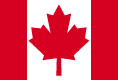
On February 15, 1965, Canada officially adopts its new red maple leaf flag on a white background, a symbol of a Canadian identity independent from the British Crown.
-
Politics
Official Languages Act, bilingualism
The Official Languages Act of 1969, adopted under Pierre Elliott Trudeau, makes English and French the two official languages of Canada, enshrining bilingualism as a national value.
-
Politics
Patriation of the Constitution
On April 17, 1982, the Canadian Constitution is patriated from London with the Canadian Charter of Rights and Freedoms, giving Canada full control over its fundamental law while remaining in the Commonwealth.
-
Politics
Quebec independence referendum
On October 30, 1995, Quebecers vote 50.58% for NO in the sovereignty referendum, an extremely narrow federalist victory that leaves the constitutional question unresolved.