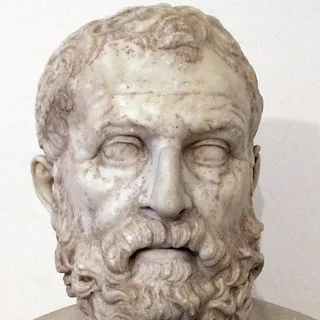
Key Facts
- c. 640 BC: born in Athens
- c. 600 BC: urges the Athenians to win back Salamis from Megara
- 594 BC: elected archon to reconcile rich and poor
- 594 BC: seisachtheia, abolition of debt slavery
- Citizens divided into four classes by the income from their land
- c. 561 BC: warns Athens against the tyranny of Peisistratos
- c. 560 BC: dies
Biography
Solon (c. 640-c. 560 BC), an Athenian statesman, lawgiver and poet, was one of the founders of Greek democracy. Elected archon in 594 BC, in a city on the brink of civil war, he abolished debt slavery, gave Athens new laws and opened a share of political life to the poorest citizens. The Greeks counted him among the Seven Sages.
Born into an aristocratic family of modest means, Solon grew rich, according to tradition, in maritime trade and travelled widely. He made his name through his poems, which remain the main source on his work: around 600 BC, in a celebrated elegy, he urged the Athenians to resume the war against Megara for the island of Salamis, which they eventually conquered. Attica was then torn apart: the great landowners held most of the land, and many indebted peasants, who handed over part of their harvests to them, were enslaved or sold abroad.
In 594 BC Solon was elected archon and entrusted, with the agreement of both sides, with restoring harmony. His first measure, the seisachtheia or “shaking-off of burdens”, cancelled debts secured on the person, forbade from then on the enslavement of a citizen for debt and brought back those who had been sold. He repealed the laws of Draco, considered too harsh, except those concerning homicide, and had his own laws inscribed on rotating wooden panels, the axones, displayed for all to see.
Solon divided the citizens into four classes according to the income from their land, from the pentakosiomedimnoi to the thetes. Only the richest could hold the highest offices, but the poorest sat in the popular assembly and in the people's court, the Heliaia, to which any citizen could appeal against the decisions of magistrates. Tradition also credits him with creating a council of four hundred members. Finally, he encouraged crafts and regulated the trade in agricultural produce, allowing only olive oil to be exported.
So as not to have to change his laws, Solon left Athens for about ten years and travelled to Egypt and Cyprus; his meeting with King Croesus of Lydia, related by Herodotus, is probably legendary. On his return the struggles between factions had resumed, and he warned his fellow citizens in vain against Peisistratos, who seized power around 561 BC. He died shortly afterwards. His reforms did not yet establish democracy, but they laid its foundations, which Cleisthenes developed at the end of the sixth century BC.
Sources: Wikipédia, « Solon »; Wikipedia, « Solon »
Related event
Also worth discovering
Portrait (cropped): Sailko, CC BY-SA 3.0, Wikimedia Commons

Last updated: