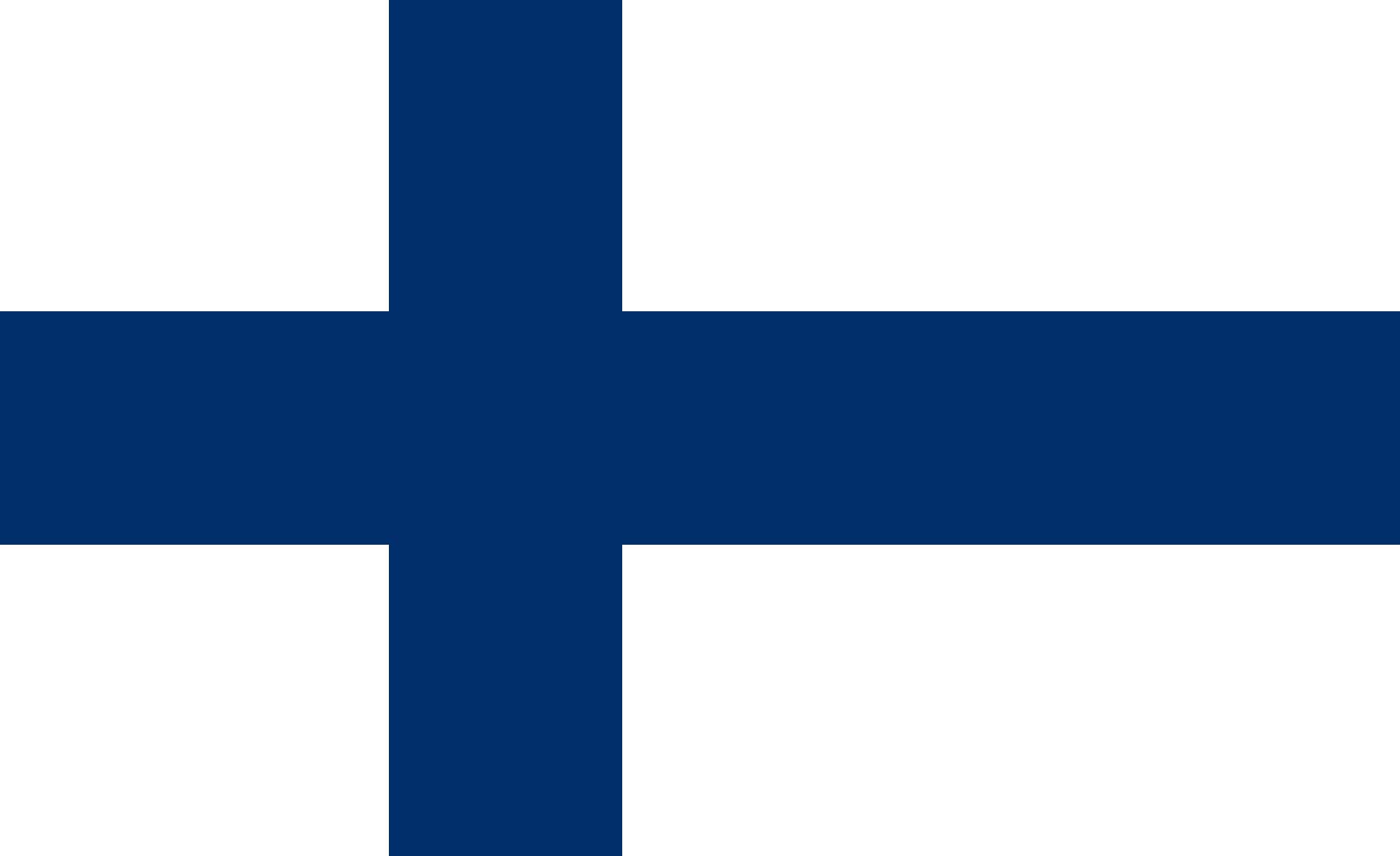
Adopted in 1918
| Capital | Helsinki |
|---|---|
| Population | 5 637 214 inh. |
| Area | 338 470 km² |
| Population density | 16.7 inh./km² |
| Local time | --:-- |
| Language(s) | Finnish, Swedish |
| Political system | Unitary parliamentary republic |
| National anthem | Our Land |
| Currency | Euro (EUR) |
| Land borders | Russia, Norway, Sweden |
| Maritime borders | Baltic Sea, Gulf of Finland |
The flag: history and symbolism
Flag History
In the 19th century, when Finland was a grand duchy attached to the Russian Empire, the writer Zacharias Topelius proposed blue and white as the national colours as early as 1862. A blue cross on a white field already existed: since 1861 it had been the ensign of the Nyland Yacht Club (Nyländska Jaktklubben) in Helsinki.
After independence was declared on 6 December 1917, a red and yellow flag bearing the lion from the coat of arms was used at first, but it recalled the divisions of the Civil War of 1918 too strongly. On 28 May 1918, Parliament adopted the flag with a blue cross on a white field, designed by the artists Eero Snellman and Bruno Tuukkanen.
The Flag Act of 1978 sets out the current rules. The state flag differs from the national flag by the coat of arms placed at the centre of the cross.
Meaning of Colours & Emblems
The most widespread interpretation follows the image suggested by Zacharias Topelius:
- White: the snow that covers the country in winter.
- Blue: Finland's thousands of lakes and the sky.
- Nordic cross: inherited from the Christian tradition, it links Finland to the family of Nordic countries.
Finns often refer to their flag as sinivalkoinen, ‘the blue and white’.
Anecdotes & Fun Facts
Midsummer (juhannus) is also Finnish Flag Day. It is the only occasion on which the flag stays up all night: it is raised at 6 p.m. on Midsummer Eve and lowered at 9 p.m. the following day, under skies that barely grow dark.
The red and yellow lion flag, briefly used in early 1918, was set aside partly because red evoked the Reds, the losing side in the Civil War.
The Åland Islands, an autonomous Swedish-speaking region of Finland, have had their own flag since 1954: a red cross edged in yellow on a blue field, combining the colours of Sweden and Finland.
Similar Flags Around the World


Sport and history
National teams
Athletes
Olympic Games
Frequently asked questions
What is the capital of Finland?
Helsinki is the capital of Finland.
What do the colours of the flag of Finland mean?
The most widespread interpretation follows the image suggested by Zacharias Topelius: White: the snow that covers the country in winter. Blue: Finland's thousands of lakes and the sky. Nordic cross: inherited from the Christian tradition, it links Finland to the family of Nordic countries. Finns often refer to their flag as sinivalkoinen, ‘the blue and white’.