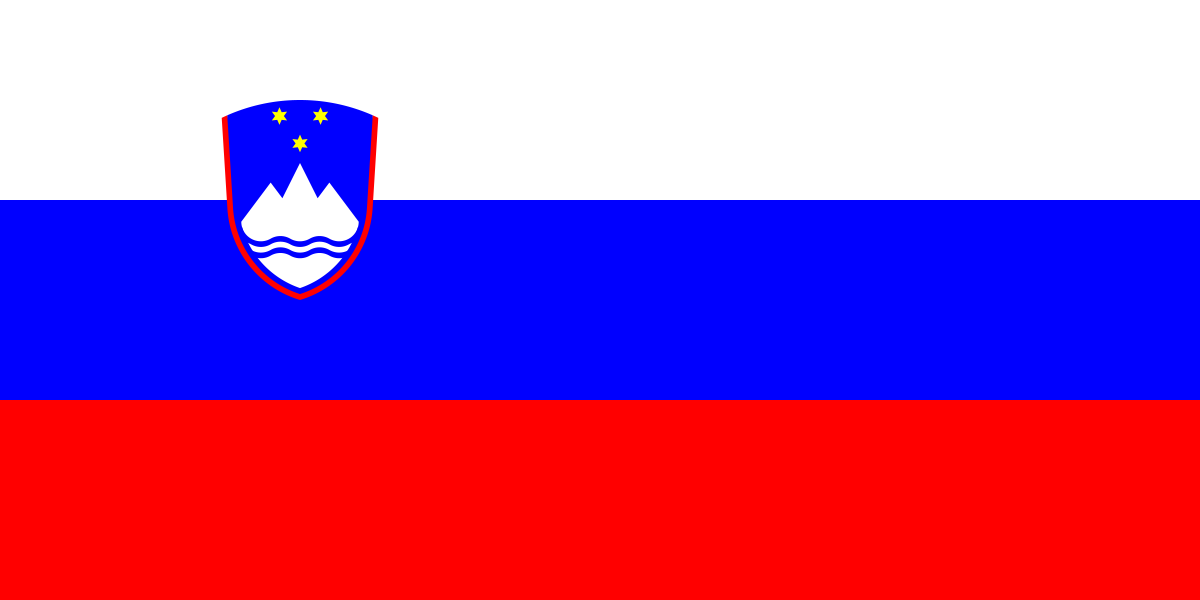
-
Politics
The Slovene lands pass to the Habsburgs
The Habsburgs acquired Carinthia and Carniola, the region of Ljubljana. Apart from a Napoleonic interlude, the Slovenes remained under their rule for almost six centuries, until the fall of Austria-Hungary in 1918.
-
Culture
First books printed in Slovene
The Protestant preacher Primož Trubar published in Germany a catechism and a primer, the first books printed in the Slovene language. They laid the foundations of the written language, and Trubar now appears on the Slovenian one-euro coin.
-
Politics
Creation of the Illyrian Provinces
Having defeated Austria, Napoleon attached the Illyrian Provinces to the French Empire, with Ljubljana as their capital. Until 1813 Slovene was taught in schools there, leaving a lasting mark on the national movement.
-
Politics
The Slovenes leave Austria-Hungary
The Slovenes, Croats and Serbs of the Austro-Hungarian Empire proclaimed a common state, which on 1 December united with Serbia in the Kingdom of Serbs, Croats and Slovenes, the future Kingdom of Yugoslavia.
-
Politics
Independence of Slovenia
After a referendum in which almost nine voters out of ten had backed independence, Slovenia left Yugoslavia on the same day as Croatia. The Yugoslav army intervened but withdrew after a ten-day war.
-
Politics
Accession to the European Union
The first former Yugoslav republic to join the European Union, a few weeks after joining NATO, Slovenia became in 2007 the first country of the former communist bloc to adopt the euro.
Other country timelines
 Austria15 BC – 1995
 Belgium57 BC – 2016
 Bulgaria681–2007
 Croatia925–2018
 Czech Republic1348–2004
 Denmark965–2024
 Estonia1219–2004
 Finland1323–2023
 France58 BC – 2024
 Germany9–1991
 Greece3000 BC – 2004
 Hungary895–2004
 Iceland874–2010
 Ireland432–2015
 Italy753 BC – 2002
 Latvia1201–1991
 Lithuania1253–1991
 Luxembourg963–2025
 Monaco1297–2005
 Netherlands69–2001
 Norway872–2011
 Poland966–2004
 Portugal218 BC – 1986
 Romania106–2007
 Russia862–2022
 Serbia1217–2006
 Slovakia863–2018
 Spain218 BC – 1992
 Sweden793–2003
 Switzerland58 BC – 2002
 Ukraine988–2022
 United Kingdom43–2016
Last updated: