Key Facts
- 1138: born in Tikrit
- 1169: vizier to the Fatimid caliph in Cairo
- 1171: ends the Fatimid caliphate
- 1174: takes Damascus and proclaims himself sultan
- 4 July 1187: victory at Hattin
- 2 October 1187: retakes Jerusalem
- 4 March 1193: dies in Damascus
Biography
Saladin (1138-1193), whose Arabic name was Salah ad-Din Yusuf, was the Sultan of Egypt and Syria who recaptured Jerusalem from the crusaders in 1187. Founder of the Ayyubid dynasty, he united much of the Muslim Middle East under his rule and fought Richard the Lionheart during the Third Crusade. His generosity towards his enemies earned him a reputation for chivalry even in the Christian West.
Born in 1138 in Tikrit, in present-day Iraq, into a Kurdish family in the service of the region's Turkish princes, he was the son of Najm ad-Din Ayyub and the nephew of the general Shirkuh. He grew up in Baalbek and Damascus in the service of Nur ad-Din, the ruler of Aleppo and Damascus who was waging holy war against the Latin states of the East. He accompanied his uncle on several expeditions to Egypt, then ruled by the Shia Fatimid dynasty and also coveted by the crusaders of the Kingdom of Jerusalem.
On Shirkuh's death in 1169, Saladin became vizier to the Fatimid caliph in Cairo. In 1171 he ended the Fatimid caliphate and brought Egypt back to Sunni Islam, recognising the authority of the Abbasid caliph in Baghdad. After the death of Nur ad-Din in 1174 he seized Damascus and proclaimed himself sultan, then gradually subdued Syria and Upper Mesopotamia: Aleppo fell in 1183. Defeated by the young King Baldwin IV at Montgisard in 1177, he now surrounded the crusader states from north to south.
On 4 July 1187 he crushed the army of the Kingdom of Jerusalem at Hattin, near the Sea of Galilee, and captured King Guy of Lusignan. He then took most of the Frankish towns and finally Jerusalem, which surrendered on 2 October 1187: unlike the crusaders of 1099, he spared the inhabitants and let them leave in return for a ransom. The Third Crusade retook Acre from him in 1191, and Richard the Lionheart defeated him at Arsuf, but failed to recapture Jerusalem. The Treaty of Jaffa in September 1192 left the city to the Muslims while opening access to the holy places to Christian pilgrims.
Worn out by his campaigns, Saladin died in Damascus on 4 March 1193, aged fifty-five, and was buried near the Great Umayyad Mosque. His empire was divided between his sons and his brother al-Adil, who kept the Ayyubid dynasty in power until the middle of the thirteenth century. A hero of the reconquest of Jerusalem in the Muslim world, he was also admired in Europe, where Dante placed him among the virtuous spirits and Lessing made him the model of the tolerant ruler.
Sources: Wikipédia, « Saladin »; Wikipedia, « Saladin »
Related event
Also worth discovering
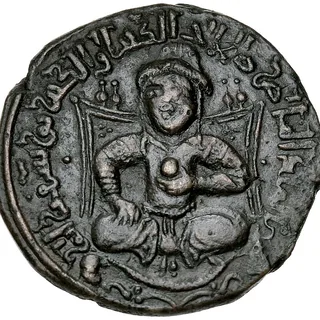
Portrait (cropped): Classical Numismatic Group, CC BY-SA 2.5, Wikimedia Commons
Last updated: