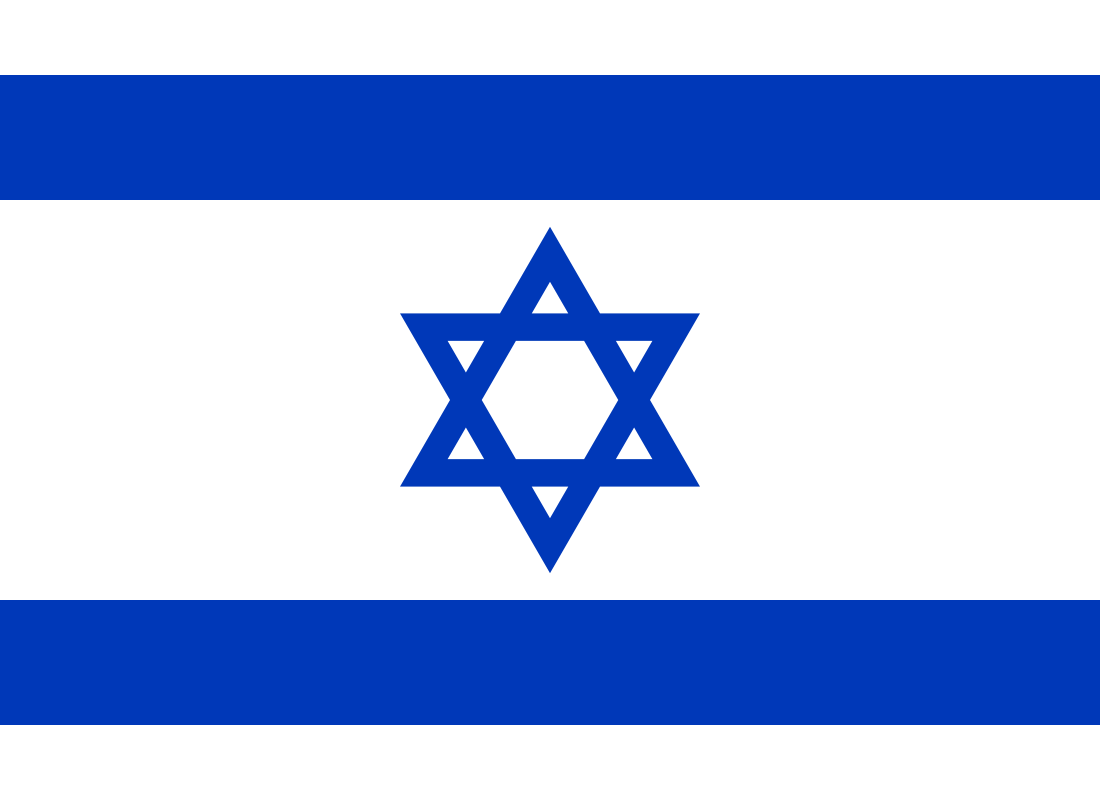
Israel: timeline and key events
10th century BC
-
Politics
David makes Jerusalem his capital
According to the Bible, around 1000 BC King David made Jerusalem the capital of the kingdom of Israel, and his son Solomon built the First Temple there. The extent and chronology of this kingdom are debated among archaeologists.
6th century BC
-
War
Destruction of the First Temple
In 587 or 586 BC, the Babylonian king Nebuchadnezzar II took Jerusalem, destroyed the Temple and deported part of the population to Babylon. After Cyrus the Great captured Babylon in 539 BC, the exiles were allowed to return and rebuilt the Temple.
1st century
-
War
Destruction of the Second Temple
During the Great Jewish Revolt against Rome, the future emperor Titus captured Jerusalem and destroyed the Second Temple. The Western Wall, or Wailing Wall, a remnant of the Temple's enclosure, became a central place of Jewish prayer.
2nd century
-
War
Bar Kokhba revolt crushed
Emperor Hadrian crushed the last great Jewish revolt, led by Simon Bar Kokhba. Jerusalem was rebuilt as Aelia Capitolina, closed to Jews, and the province of Judaea was renamed Syria Palaestina; the Jewish diaspora grew.
7th century
-
Religion
Arab conquest of Jerusalem
Caliph Umar entered Jerusalem, taken from the Byzantines. The Dome of the Rock, completed around 691, and later the al-Aqsa Mosque made the Haram al-Sharif, or Temple Mount, the third holiest site in Islam.
11th century
-
War
The Crusaders take Jerusalem
At the end of the First Crusade, the Crusaders seized Jerusalem and massacred much of its Muslim and Jewish population. The Latin Kingdom of Jerusalem lost the city to Saladin in 1187.
16th century
-
Politics
The region comes under Ottoman rule
After defeating the Mamluks, Sultan Selim I annexed the region, which remained Ottoman for four centuries. His son Suleiman the Magnificent had the walls of Jerusalem rebuilt; they still stand today.
19th century
-
Politics
First Zionist Congress in Basel
Convened by the journalist Theodor Herzl, author of The Jewish State, the first Zionist Congress set itself the goal of creating a national home for the Jewish people in Palestine, against a background of persecution and antisemitism in Europe.
20th century
-
Politics
Balfour Declaration
The British government declared its support for the establishment in Palestine of a “national home for the Jewish people”, provided that nothing was done to prejudice the civil and religious rights of the non-Jewish communities. The United Kingdom then governed the region under a League of Nations mandate, from 1920 to 1948.
-
Politics
UN partition plan
Two years after the Holocaust, the United Nations General Assembly adopted Resolution 181, providing for the partition of Palestine into a Jewish state and an Arab state, with Jerusalem under an international regime. Accepted by the Jewish leadership and rejected by the Arab leadership, the plan was followed by a civil war.
-
Politics
Proclamation of the State of Israel
On the eve of the end of the British Mandate, David Ben-Gurion proclaimed Israel's independence in Tel Aviv; the armies of several Arab states intervened the next day. For Israelis, it was the War of Independence; for Palestinians, the Nakba (“catastrophe”): some 700,000 of them fled or were expelled.
-
War
Six-Day War
After weeks of tension, including Egypt's closure of the Straits of Tiran, Israel attacked on 5 June and in six days captured the Sinai, the Gaza Strip, the West Bank, East Jerusalem and the Golan Heights. UN Security Council Resolution 242 set out the principle of “land for peace”.
-
War
Yom Kippur War
On Yom Kippur, Egypt and Syria launched a surprise attack on Israel in the Sinai and on the Golan Heights. After heavy initial losses, Israel regained the upper hand; the conflict triggered the first oil crisis.
-
Politics
Peace treaty with Egypt
Following the Camp David Accords (1978), Prime Minister Menachem Begin and Egyptian President Anwar Sadat signed in Washington the first peace treaty between Israel and an Arab country. Israel returned the Sinai in 1982; Jordan in turn made peace in 1994.
-
Politics
First Intifada
A Palestinian uprising against the Israeli occupation broke out in the Gaza Strip and then in the West Bank, with demonstrations, strikes and stone-throwing. It lasted into the early 1990s and saw the emergence of Hamas, which rejected any recognition of Israel.
-
Politics
Oslo Accords
At the White House, Yitzhak Rabin and Yasser Arafat sealed with a handshake the mutual recognition of Israel and the Palestine Liberation Organisation (PLO) and the establishment of Palestinian self-rule. Rabin, Arafat and Shimon Peres received the Nobel Peace Prize in 1994.
-
Politics
Assassination of Yitzhak Rabin
Prime Minister Yitzhak Rabin was assassinated in Tel Aviv after a peace rally by Yigal Amir, an Israeli Jewish extremist opposed to the Oslo Accords. His death dealt a lasting blow to the peace process.
-
War
Second Intifada
After the failure of the Camp David summit and Ariel Sharon's visit to the Temple Mount, or Haram al-Sharif, a new Palestinian uprising broke out. Marked by suicide bombings in Israel and Israeli military operations in the Palestinian territories, it left more than 4,000 dead, the great majority of them Palestinians, by 2005.
21st century
-
Politics
Israeli withdrawal from the Gaza Strip
On the decision of Prime Minister Ariel Sharon, Israel evacuated its settlements and troops from the Gaza Strip. Hamas, which won the 2006 Palestinian legislative elections, took control of the territory in 2007; Israel and Egypt then imposed a blockade on it.
-
War
7 October attack and the war in Gaza
Hamas and other armed groups launched an attack from Gaza on southern Israel: around 1,200 people, most of them civilians, were killed and 251 taken hostage. The war Israel waged in response in the Gaza Strip left more than 67,000 dead in two years, according to the Gaza Health Ministry, which operates under Hamas authority, and caused a severe humanitarian crisis; a ceasefire took effect on 10 October 2025.