Key Facts
- c. 1027-1028: born at Falaise, illegitimate son of Duke Robert the Magnificent
- 1035: becomes Duke of Normandy at the age of seven or eight
- 1047: victory over the rebel barons at Val-ès-Dunes
- 14 October 1066: victory over King Harold II at Hastings
- 25 December 1066: crowned at Westminster Abbey
- 1086: survey of the kingdom recorded in the Domesday Book
- 9 September 1087: dies at Rouen; buried in the Abbaye aux Hommes, Caen
Biography
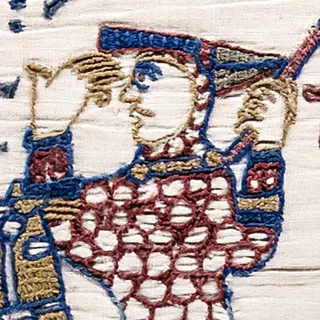
William the Conqueror (c. 1028-1087), Duke of Normandy from 1035 and King of England from 1066 until his death, led the last successful conquest of England. His victory at Hastings on 14 October 1066 placed a Norman dynasty and aristocracy on the English throne and left a lasting mark on the language, institutions and architecture of the kingdom.
Born at Falaise in about 1027 or 1028, he was the illegitimate son of Duke Robert the Magnificent and Herleva, the daughter of a local townsman, which first earned him the nickname “William the Bastard”. When his father died in 1035, he became duke at the age of seven or eight, in a Normandy torn by the rivalries of its barons. With the support of King Henry I of France, he crushed the rebels at Val-ès-Dunes in 1047, then fought off the armies of the same king, who had turned against him, notably at Varaville in 1057. He married Matilda of Flanders in the early 1050s and took control of Maine around 1062.
King Edward the Confessor of England, whose mother, Emma, was William's great-aunt, died childless in January 1066. The duke claimed that Edward had promised him the crown, but Earl Harold Godwinson had himself crowned as Harold II. William assembled a fleet and landed at Pevensey on 28 September 1066, just after Harold had repelled a Norwegian invasion at Stamford Bridge. The two armies met near Hastings on 14 October: the English king was killed and his forces were defeated. William was crowned at Westminster Abbey on Christmas Day 1066.
The first years of the reign were marked by revolts, which the new king put down harshly, above all in the “Harrying of the North” in the winter of 1069-1070, which laid waste to Yorkshire. The old Anglo-Saxon aristocracy was almost entirely replaced by lords from Normandy and France, while bishoprics and the great abbeys passed to Norman churchmen. William built castles throughout the country, including the Tower of London, and Norman French became the language of the court and the aristocracy for several centuries. In 1086 he ordered a vast survey of the land and wealth of the kingdom, recorded in the Domesday Book.
Divided between his two realms, he spent much of his last years in Normandy. In 1087, during a campaign against the King of France, he was injured or fell ill when Mantes was taken, and he died at Rouen on 9 September 1087. He was buried in the Abbaye aux Hommes in Caen, which he had founded. His eldest son, Robert Curthose, received Normandy and another son, William Rufus, England; the youngest, Henry Beauclerc, would later reunite the two inheritances.
Sources: Wikipédia, « Guillaume le Conquérant »; Wikipedia, « William the Conqueror »
Kings & Queens of England (1066-1087)
Related event
Also worth discovering
Last updated: