| Capital | Pretoria |
|---|---|
| Population | 64 007 187 inh. |
| Area | 1 219 090 km² |
| Population density | 52.5 inh./km² |
| Local time | --:-- |
| Language(s) | Zulu, Xhosa, Afrikaans, Northern Sotho, Tswana, Sotho, Tsonga, Swazi, Venda, Southern Ndebele, English |
| Political system | Unitary parliamentary constitutional republic |
| National motto | Unity in Diversity |
| National anthem | National anthem of South Africa - combination of 'Nkosi Sikelel' iAfrika' (God Bless Africa) and 'Die Stem van Suid-Afrika' (The Call of South Africa) |
| Currency | South African rand (ZAR) |
| Land borders | Botswana, Lesotho, Namibia, Mozambique, Swaziland, Zimbabwe |
| Maritime borders | Atlantic Ocean, Indian Ocean |
The flag: history and symbolism
Flag History
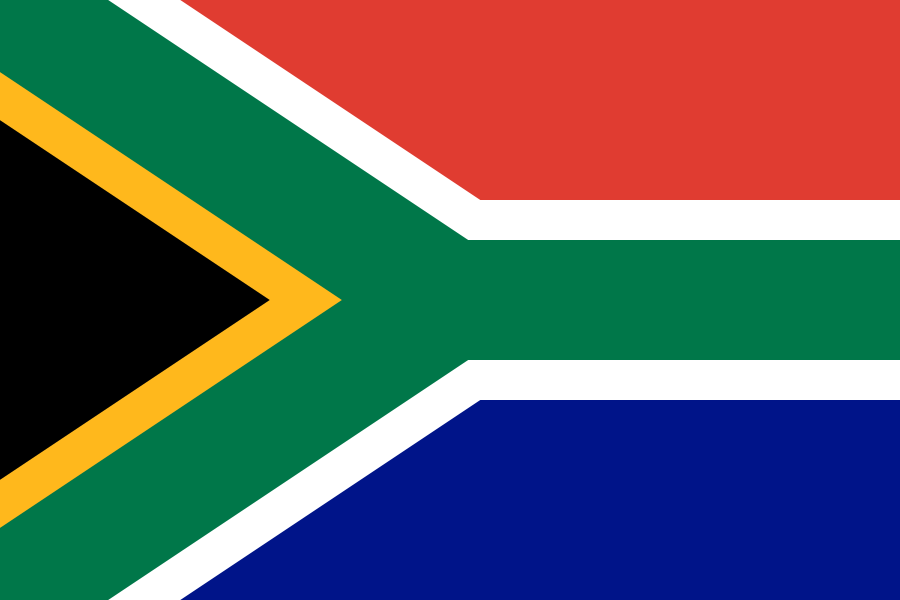
The current flag was adopted on 27 April 1994, the very day of the country's first fully democratic elections, marking the official end of apartheid. Designed under intense time pressure by State Herald Frederick Brownell, it was initially meant only as an interim flag, before being confirmed permanently by the new Constitution of 1996.
The design combines colors tied to different political and historical traditions in the country: the black, green and gold of the African National Congress, together with the red, white and blue inherited from the British and Boer flags previously used in the region.
With its six colors, it is today one of the few national flags to combine so many without relying on a coat of arms or a central emblem, most traditional flags being limited to two or three colors.
Meaning of Colors & Emblems
An unusual case among national flags: no official meaning has ever been assigned to each of the six colors individually, a deliberate choice meant to keep the flag from being claimed by the history of any single political or cultural group in the country.
The only element carrying official symbolism is the flag's shape itself: a horizontal "Y," known in heraldry as a pall, representing the convergence of different paths and histories into a united nation moving forward together.
Anecdotes & Fun Facts
The flag was designed under intense time pressure, in a matter of days, at a moment when the country had still failed to agree on a new national symbol ahead of the historic elections of April 1994. Adopted at first only as an interim design, it ultimately prevailed through sheer popular success.
South Africa's flag is often cited as a rare case of a six-color national flag with no coat of arms or central emblem, most flags combining that many colors also carrying a coat of arms or national seal.
Despite the absence of any official meaning for the colors, many South Africans still read personal significance into them, particularly a link to the historic colors of the African National Congress: black, green and gold.
Frequently asked questions
What is the capital of South Africa?
Pretoria is the capital of South Africa.
What do the colors of the South Africa flag mean?
An unusual case among national flags: no official meaning has ever been assigned to each of the six colors individually, a deliberate choice meant to keep the flag from being claimed by the history of any single political or cultural group in the country.The only element carrying official symbolism is the flag's shape itself: a horizontal "Y," known in heraldry as a pall, representing the convergence of different paths and histories into a united nation moving forward together.
Which countries border South Africa?
South Africa shares land borders with: Botswana, Lesotho, Namibia, Mozambique, Swaziland, Zimbabwe.