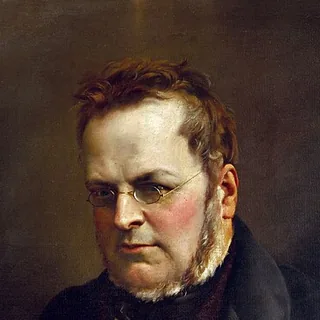
Camillo Cavour
Key Facts
- Born on 10 August 1810 in Turin, into a family of the Piedmontese nobility
- Founds the newspaper Il Risorgimento in 1847
- Prime minister of the Kingdom of Piedmont-Sardinia from 1852
- Takes Piedmont into the Crimean War in 1855
- Secures at Plombières (1858) Napoleon III's alliance against Austria
- First prime minister of the Kingdom of Italy, proclaimed on 17 March 1861
- Dies in Turin on 6 June 1861, less than three months after the kingdom's proclamation
Biography
Camillo Benso, Count of Cavour (1810-1861), was the political architect of Italian unification. As prime minister of the Kingdom of Piedmont-Sardinia, he pursued a skilful diplomacy that in less than ten years turned a small Alpine kingdom into the core of the Kingdom of Italy, proclaimed a few weeks before his death.
Born on 10 August 1810 in Turin, then part of the French Empire, into a family of the Piedmontese nobility, he spoke French as his first language. An officer in the engineers, he left the army young, travelled in France and England and became passionate about liberalism, political economy and technical progress. He modernised the family estates and in 1847 founded the newspaper Il Risorgimento, which would give its name to the national movement.
A deputy in 1848, minister of agriculture and trade and then of finance from 1850, he became prime minister in November 1852 thanks to an alliance with the centre left, the “connubio”. He developed the railways, credit and free trade, and reduced the weight of the Church by suppressing many religious orders. To make Piedmont's voice heard, he took it into the Crimean War in 1855 alongside France and Britain, which gave him a seat at the Congress of Paris in 1856.
In 1858, at Plombières, he obtained from Napoleon III the promise of an alliance against Austria, in exchange for Nice and Savoy. The war of 1859 gave Lombardy to Piedmont, but the armistice of Villafranca, concluded without him, led him to resign. Back in power in January 1860, he had the annexation of central Italy ratified by plebiscites, let Garibaldi act in Sicily, then sent the Piedmontese army into the Papal States to keep control of the movement. On 17 March 1861 the Kingdom of Italy was proclaimed, and Cavour became its first prime minister.
Cavour died in Turin on 6 June 1861, aged fifty, without seeing Rome or Venice join Italy. He left the formula “a free Church in a free State”, which sums up his liberal view of relations between religion and power. With Garibaldi, Mazzini and Victor Emmanuel II, he is counted among the “fathers of the fatherland” of Italy.